FOR SUPPORT, CALL 1-866-APF-3635 (273-3635)
Acute Intermittent Porphyria (AIP)
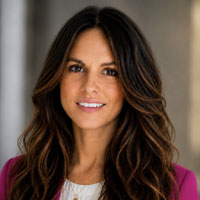
My symptoms began around age twelve with nausea and stomach pain that would not let up. At first, everyone blamed puberty. Then the guess became endometriosis, which ran in my family and seemed like a reasonable explanation.
Over the next eight years, I got sicker. I had bladder problems, blood in my urine, biopsies, scopes, and test after test that explained nothing. Every new theory came with a new treatment, and none of them worked. The word I heard most from doctors was “inconclusive.”
I was lucky to be surrounded by love. I’m an only child, the only girl in a family full of boy cousins, with grandparents who were part of my everyday life and a mom who became my fiercest advocate. But love could not make the medical system listen.
High school was lonely. My friends were going to games and dances while I was home, exhausted and in pain, sinking into depression. Depression convinced me that the pain would never end and that my family would be better off without me. At sixteen, I attempted to end my life. I survived, and I am grateful every day that I did.
Then came more confusion. In ninth grade, I passed out while driving and had a car accident. At the hospital, doctors assumed I had tried to hurt myself again. I hadn’t, but few people believed me, and for a while I’m not sure my own mom did. A year later, I collapsed at school, and doctors suspected I was smoking. Eventually, my primary care provider suggested I was making up my symptoms and accused my mom of having Munchausen syndrome by proxy, a condition in which a caregiver invents or exaggerates a loved one’s symptoms for attention. We felt completely unseen.
My mom refused to accept that idea. She walked me out of that exam room, went straight to the front desk, and asked whether any other doctor in the clinic could see us that same day.
That doctor listened. He studied my chart closely, then told us he had never treated a patient with this condition but remembered reading about it in medical school. He thought my symptoms pointed to Acute Intermittent Porphyria (AIP). A test existed to confirm it. No one had ever thought to order it before.
When the results came back positive, I almost couldn’t believe it. Not “inconclusive.” Positive. My doctor was honest that he needed to send me to a specialist, and my mom immediately started learning everything she could. Together we found lists of medicines that can be unsafe for people with AIP, and we were stunned to see some of mine on them. It finally made sense why I had gotten worse with each new diagnosis and treatment.
With my doctor’s guidance, I changed my medications, my diet, and my daily habits. Slowly, I improved. I finished high school, then studied international studies, professional technical writing, and nonprofit management at a college close to home so my parents were nearby if I got sick. I earned a 4.0. After years of falling behind, it felt like I was finally catching up to my own life.
During college, I completed an internship with a nonprofit in Romania. I worked alongside incredible people, ate fresh farm-to-table food, and felt better than I had in years. By the end, they had offered me a full-time job once I graduated. It was a dream come true, and I finally thought my life was starting to take shape.
A month after I came home, I became severely ill and was admitted to the hospital. Even with my diagnosis, some of my doctors hesitated to treat me for AIP. One became almost obsessed with the fact that I had worked around livestock in Romania. He used that knowledge to make heinous and disgusting accusations about activities he was adamant I had taken part in, and he blamed them for my illness. He even told me my life depended on being honest with him. It was humiliating, and it is a painful example of what porphyria patients can endure at the hands of providers who do not understand the disease. I was hospitalized for more than a month, and was given treatments that were not right for AIP, which made things worse. Near the end, my fever reached 105, I had seizures, and my care team packed me in ice to cool me down. My family was told to prepare for the worst.
In a moment of clarity, I pulled my dad close by his tie and begged him not to give up on me. I told him I was not going to die there.
I didn’t. But recovery took a long time. I tried to return to school twice and had to stop both times. The nonprofit in Romania held my job for more than a year, until I finally had to let it go. That loss broke my heart.
As my friends started careers, got married, and had babies, I felt left behind. I married someone who said he was ready for the challenge of AIP, but he later told me he couldn’t handle my illness. Soon after, I took part in setting up a treatment plan with my clinic. I was the first patient there with AIP, so I gave the staff permission to share my contact information with anyone else who was diagnosed. Every once in a while, I still get a call or a message on social media, and I always answer. I never want anyone to feel as alone as I did.
For a few years, I took temp jobs between attacks and hospital stays, and I felt isolated and discouraged. Then I found an online support group via the APF, reached out during one of my lowest moments, and a stranger invited me into a small circle of five other porphyria patients. They kept me going. I truly believe I am here today because of them, and they are still some of my closest friends.
My dogs deserve a mention too. Right after my divorce, I adopted a lab mix named Coal. I may have rescued him, but in truth it was the other way around. There were days when I was so sick and in pain that I only got out of bed because I knew he needed me.
I also learned that chronic illness changes the dynamics of relationships. And that shift happens in both directions and can be hard to adjust to. For example, there were stretches when my mom and I were more caregiver and patient than mother and daughter. And the same can be said for the fate of some of my romantic relationships as well. I have dated men who seemed up for the challenge, but they always succumbed to the same ending. While these were heartbreaking in the moment, they taught me valuable lessons about what I truly wanted in a partner and how much the people who love us carry along with us in this journey.
Today, I work closely with a care team I trust: a primary care provider, a hematologist, and a therapist who listen carefully and stay ahead of my physical and mental health. I have learned to watch for my attack triggers and for the way my mood can dip in colder months. I became a certified Arkansas Master Naturalist, and I built a professional background in operations, program management, organizational development, communication, and leadership. Learning everything I could about my condition, and talking with other people who live with it, changed my life.
Some years after my divorce, I reconnected with my first love, Jacob, and his two wonderful teenagers, Hiedi and Mason. I adored them, but part of me still longed to experience motherhood from the very start. For a long time, I assumed pregnancy was off the table for me because of porphyria. I knew what fluctuating hormones could potentially do to an AIP patient, and I counted myself out. But I also had heard stories of people who felt great while pregnant, and that gave me hope.
My doctor told me I was healthier than I had ever been. He said that if I wanted to try, now was the time. With my age also playing a factor, in his opinion it was now or never. After many conversations and putting a plan in place with my care team in case I did have another severe attack while pregnant, Jacob and I decided to go for it. In 2023, I became pregnant, and to my surprise, my porphyria stayed under control the entire time. I developed preeclampsia late in pregnancy, which my doctors did not connect to porphyria. After 37 weeks, bedrest, an induction, and a very long labor, our daughter Maggie arrived without complication for me or her. She is joyful, healthy, and lights up every room. She is truly my miracle.
This is just my experience, and pregnancy is not safe or possible for everyone with porphyria. If you are thinking about it, please talk with your own care team.
Porphyria took a great deal from me. It took years of my childhood, teenage years, and young adulthood, along with my education, a job I loved overseas, and relationships that, at the time, I wanted to keep. For a long time, I just tried to get through each day and not give up.
Now I get to turn that around. As the Director of Patient & Physician Programs at the American Porphyria Foundation, I am coming full circle. The girl who sat in exam rooms wishing someone would simply listen is now working to make sure patients and doctors can find each other, and find the right information, sooner. Patients deserve knowledgeable care. Physicians deserve reliable resources and expert support. I want to help build the bridge between them.
Porphyria may have taken a lot from me, but I am back, and I promise I am here to even the score.
The love of my family, my friends, and my porphyria community has become my foundation. It is why I share my story, and why I will keep advocating for anyone who is still searching for answers. Living with AIP is hard, but with the right support, joy, purpose, and peace are possible. If you are still searching for answers, you are not alone.
Contact Megan
Email: megan@porphyriafoundation.org
Phone: 1-866-273-3635
Source: Megan Parrish, personal story. This story reflects one person’s experience and is for educational purposes only. It is not medical advice. Please talk with your own health care team about your care.
If you or someone you love is struggling with thoughts of suicide, you can call or text 988 (U.S.) at any time.