FOR SUPPORT, CALL 1-866-APF-3635 (273-3635)
Acute Intermittent Porphyria (AIP)
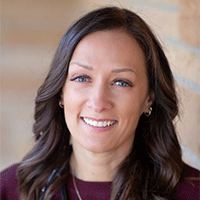
April Trebelhorn, Nurse Practitioner
Living Without Fear: My Journey with Acute Intermittent Porphyria
I grew up always knowing there was a family history of acute intermittent porphyria (AIP). But beyond that, it wasn’t something I truly understood. I had surgeries, my wisdom teeth removal and tonsillectomy, and simply mentioned my family history to the anesthesia team. That was the extent of my awareness.
My first porphyria attack came unexpectedly at age 28. At the time, my young son had been admitted to Children’s Hospital for four days. During his hospitalization, he was unable to eat, and as parents staying by his side, we also weren’t eating much. My intake significantly decreased. At the same time, I had just found out I was pregnant with my daughter. A few days into my son’s hospital stay, I began experiencing lower back pain. I initially brushed it off, assuming it was from sleeping on the uncomfortable sleeper sofa. But after my son was discharged, things quickly worsened.
By Friday, I was experiencing severe abdominal pain, nausea and vomiting. I could barely eat and struggled to take care of my child, let alone myself. I went in for evaluation, where an ectopic pregnancy was ruled out. Labs were drawn, and I was told to increase fluids. I was discharged with reassurance and given pain medications considered safe in early pregnancy. By Saturday morning, I still wasn’t improving. My primary care provider had me come in for IV fluids and pain control. For a short time, it helped. I was also told constipation could be contributing to my symptoms. But that night, everything escalated.
The pain became unbearable unlike anything I had ever experienced. My husband rushed me to the emergency department. I arrived hyperventilating, unable to speak clearly, and completely consumed by the intensity of the pain. In the ER, I received IV fluids and multiple doses of pain medication before I could even begin to process what was happening. Then, something pivotal occurred.
The emergency physician, Dr. Petersen, who I am forever grateful for, noticed my family history of porphyria in my chart and asked, “Do you have porphyria? Have you ever had an attack before?” I hadn’t. At the time, I didn’t fully understand what an attack would look like. But he recognized the possibility and sent my urine off for testing.
I was admitted to the hospital, where I remained for 10 days on a continuous IV pain pump for pain control. I went through countless tests, labs, imaging, everything, yet there was no clear diagnosis to explain my symptoms. A week later my urine porphobilinogen (PBG) test came back ,and my levels were through the roof. I was treated with Panhematin, and by the third dose, I began to feel relief. Panhematin treatment ultimately saved my life.
After discharge, I returned the following day to complete my final infusion. My symptoms gradually resolved, but it took about a month to fully regain my strength. The attack had completely taken everything out of me. Despite everything, I went on to have a normal pregnancy, and my daughter was born healthy with no complications.
Following my hospitalization, I was referred for genetic testing and was found to carry the HMBS gene mutation. This diagnosis led to additional testing within my family. We discovered that my grandfather, mother, sister, and I all have the mutation, and now, both my sister and I each have daughters who also have the mutation for acute intermittent porphyria. In our family, it has been predominantly expressed in females.
I was fortunate to connect with specialists, including renowned porphyria expert, Dr. Pierach and Dr. Vercellotti at the University of Minnesota. They provided invaluable education and guidance on how to live with acute intermittent porphyria. One piece of advice from Dr. Pierach has stayed with me ever since: “Live your life like you don’t have the disease. Don’t let it control you.” I held onto that.
For six years, I did not experience another attack. Then, I went through a difficult period where I was hospitalized three times within one year. At that point, it became clear I needed a different approach. I wasn’t entirely sure what my triggers were, fasting, hormonal changes, stress, but I knew something had to change.
I started Givlaari injections and stayed on them for about a year before eventually stopping due to side effects. Fortunately, during my time on Givlaari. I was able to avoid hospitalizations and manage flare ups with IV dextrose and increased carbohydrate intake. Since then, I have had one flare requiring a course of Panhematin infusions. Otherwise, I consider myself very fortunate. I was diagnosed during my first emergency room visit, something I know is rare. It truly hurts my heart knowing that so many people struggle for years with symptoms before finally receiving a diagnosis.
Today, I have a treatment plan in place. My local hospital keeps Panhematin readily available, and I work closely with Dr. Vercellotti at the University of Minnesota, while also receiving care through my small-town clinic, Glencoe Regional Health, where I work alongside the same team that cares for me. I am incredibly grateful for providers who listen, take my symptoms seriously, and act quickly to get me the medication I need to control my porphyria.
I’ve learned how to manage my condition day-to-day, prioritizing nutrition, avoiding prolonged fasting, managing stress, and stabilizing hormonal fluctuations. I stay active and listen closely to my body. But more than anything, this journey has given me purpose.
At this stage in my life, I feel called to be an advocate, not only for myself, but for others. Having a daughter and a niece with porphyria has changed everything. I feel a deep responsibility to educate others about acute intermittent porphyria, how to recognize it, how to diagnose it, and most importantly, how to listen to patients and treat their symptoms appropriately.
Because unless you’ve experienced it, you cannot fully understand the severity of the pain during an attack.
There was a time when fear consumed me, fear that the pain would return, fear that I might not be able to live a normal life, fear that no one would listen or believe me when I needed help the most. But through that fear, I found my voice. I have learned to advocate for myself, and now, for the next generation in my family.
That is why I chose to become involved with the American Porphyria Foundation. Being part of a community of individuals who understand this journey has been incredibly humbling. It reminds me that I am not alone, and neither are they.
Editor note. We are happy to announce that April, who is a Nurse Practitioner, will be treating patients with the acute porphyrias. If you live near April and need assistance and a referral, please contact the APF for help.