FOR SUPPORT, CALL 1-866-APF-3635 (273-3635)
Congenital Erythropoietic Porphyria (CEP)
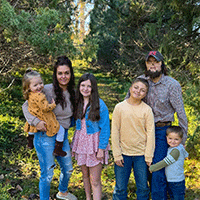
Justin Hamilton is a courageous man whose life reflects both the severity of Congenital Erythropoietic Porphyria (CEP) and the remarkable resilience of people living with this ultra-rare condition. His story highlights not only the daily struggles of managing a devastating genetic disorder but also the courage, family love, and advocacy that sustain him every day. Justin was diagnosed with Congenital Erythropoietic Porphyria—a rare genetic disorder resulting from deficient activity of the enzyme uroporphyrinogen III synthase—early in life. Shortly after birth, his caregivers noticed that his urine had a distinctive reddish fluorescence, a classic early sign of porphyrias. At just six months old, doctors confirmed his diagnosis after observing blistering of his skin in response to sunlight.
Unlike many inherited conditions, CEP is extremely rare—with only a few hundred reported cases worldwide—and often presents within the first months or years of life. Patients like Justin live every day avoiding sunlight and managing the painful effects of porphyrin accumulation in skin and tissues. Because CEP causes severe photosensitivity, blistering, and scarring, Justin’s daily life has been shaped by careful avoidance of sunlight. Even brief exposure to sun or certain artificial lighting can lead to painful blisters that take weeks to heal and leave permanent scarring.
Over time, this repeated damage has affected his skin and vision; Justin has experienced eye complications related to CEP that taken his visin in one eye and severely reduced vision in the other eye requiring ongoing specialist care. In fact, Justin has to drive four hours weekly from his home to Denver to keep from losing his remaining eye. The problem s complex as the skin damage is pulling his eyelid down where he can’t blink thus endangering the eye. The specialist must administer treatment to save the eye. Meanwhile, Justin and his devoted wife, Holly, manages chronic sores, blistering, and infections with protective clothing, sunscreen, lotions, and careful coverage whenever he is outdoors. Despite these challenges, Justin and Holly have built a full and meaningful life with their four children. His family is central to his strength and motivation. Justin describes his children as his “reason for living,” even though physical limitations—like scarred, fragile hands—make everyday tasks, such as changing diapers or playing outside, more difficult than they are for most parents.
Work is important to him, and he contributes where he can, helping with farm work or family business duties. His daily routine involves sun protection, regimented skincare, and adaptation to physical limitations, yet he strives to participate in life to the fullest extent possible. Living with a visible skin condition has also brought emotional and social challenges. Justin has spoken openly about painful encounters with strangers who stare or misunderstand his appearance, a common experience for people with rare visible conditions. Nonetheless, he emphasizes that his faith, positive attitude, and family support help him navigate both physical and emotional pain. In his reflections, Justin describes CEP bluntly: “CEP sucks” for its hardship and constant care it demands. Yet he also speaks of the lessons it has taught him, including determination, vigilance in self-care, and a deep appreciation for simple joys that many people take for granted.
Justin’s journey also highlights the importance of community and support. He has been a long time CEP advocate for the American Porphyria Foundation and even serves on their Member Advisory Board. The APF he says provides him with platforms for sharing stories, connecting with others affected by porphyria, and raising awareness. His story has been featured as part of broader awareness initiatives—including Porphyria Awareness Week—helping to educate the public about CEP and the lived experience of people with this condition. Justin Hamilton’s life illustrates both the devastating impact of a rare genetic disease and the strength of the human spirit. While CEP remains without widely available curative therapy, and life with the condition demands constant adaptation, Justin’s journey underscores that a meaningful life filled with family, purpose, and advocacy is possible even in the face of chronic adversity. Justin will be participating in the trials for the new CEP treatment and is appearing in the upcoming documentary , ITS ALL IN YOUR HEAD.